plate 01
The Salt Verge
Ferry ramps, white stones, gull cries that stop together. Best read at low light.
monster atlas
The atlas does not pretend that imaginary creatures respect clean boundaries. It maps repeated symptoms instead: a smell of metal near water, the shape of a shadow against brick, the etiquette of a closed gate, the color of light under a bridge. These clues create regions that overlap like weather. A monster may belong to a route for one evening and to a household rule the next. That uncertainty is the point. Across Monster uses the atlas to help readers build consistent folklore without draining it of strangeness.
Each region is written as a working plate: signs, safe distance, likely offerings, story pressure, and false positives. False positives matter because not every creak is a creature and not every old custom hides teeth. The atlas keeps the mundane world visible so the uncanny can arrive with better contrast.
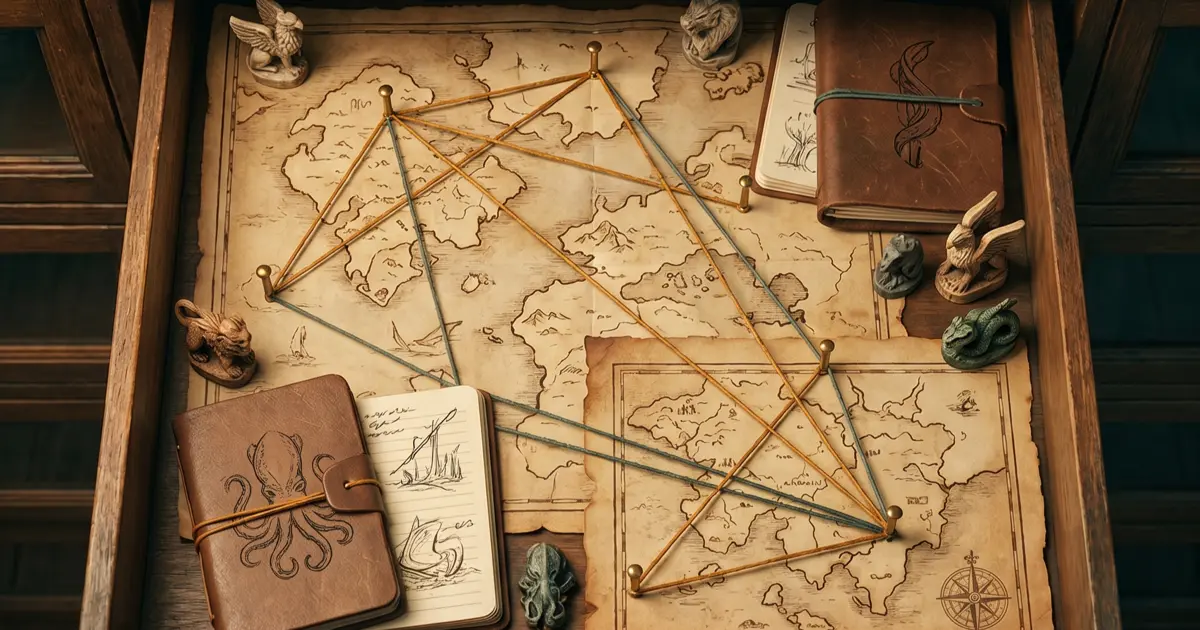
plate 01
Ferry ramps, white stones, gull cries that stop together. Best read at low light.
plate 02
Old fruit trees, ladder shadows, baskets left upside down as polite refusals.
plate 03
Stations after the final train, warm rails, vending machines humming in pairs.
plate 04
Raised paths, stitched reeds, patient lights moving one field away.
plate 05
Chimney lanes, soot marks, blackened handles that never stain the palm.
plate 06
Hotels, libraries, public halls, and staircases with one extra landing.