Approach
Mark the last ordinary landmark before the route changes. This is the point you must be able to find again.
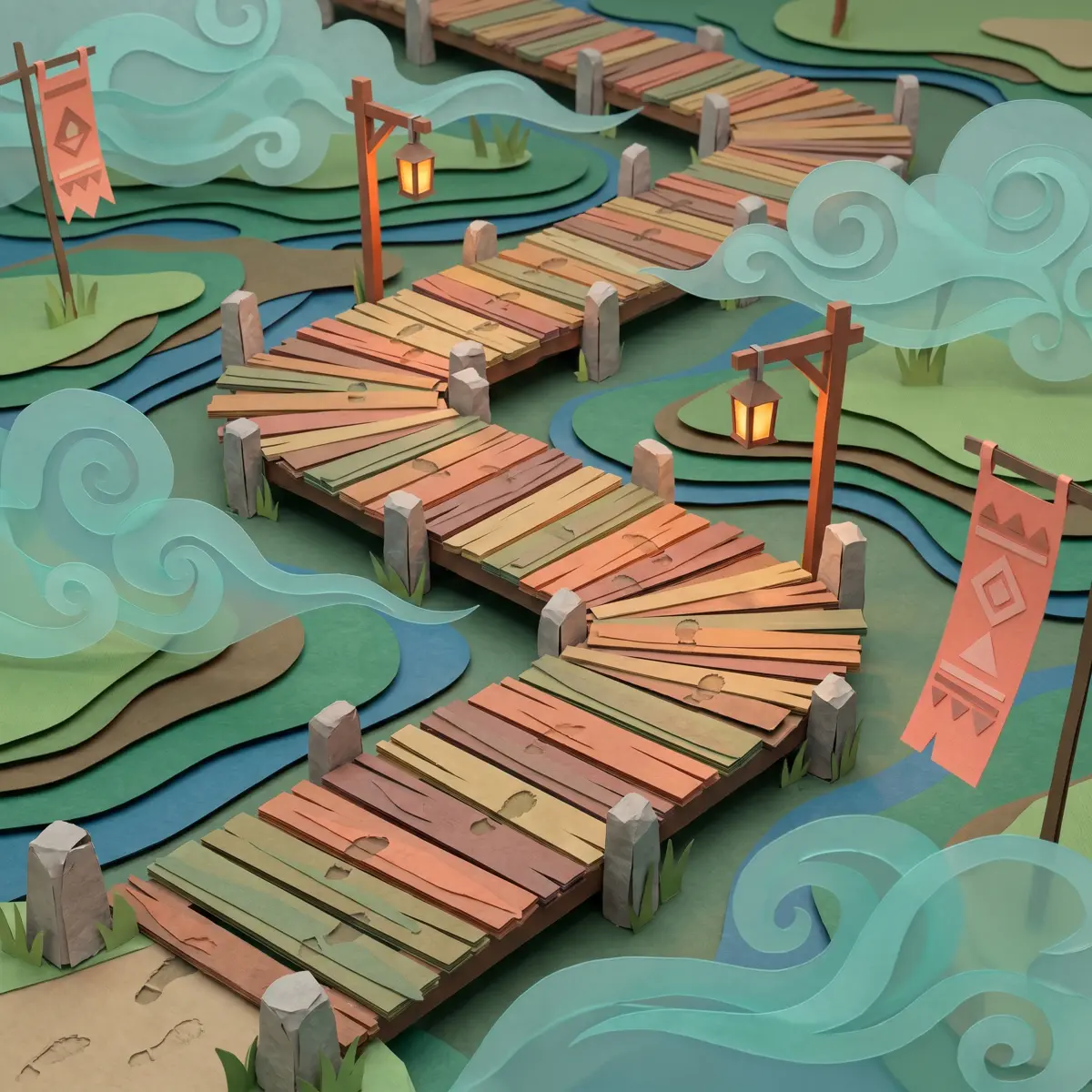
crossing rules
A crossing is a negotiation with place. The first rule is to notice what the route asks before inventing what the creature wants. If a bridge is wet on only one plank, step around it. If a lane smells of rain during a dry hour, slow down. If an animal sound repeats too perfectly, stop counting and listen for the gap. Across Monster records rules like these as field manners rather than commandments. They are designed for stories, walks, and games where a boundary should feel patterned.
The second rule is to carry something ordinary. A ribbon, a pencil, a biscuit tin, or a clean handkerchief gives the scene a human scale and prevents the encounter from becoming only spectacle. The third rule is to leave by a route you can describe. Folklore often punishes arrogance, but it also rewards people who can explain where they have been. The final rule is restraint: do not name every footprint, do not force every silence to answer, and do not turn a warning into a dare.
Mark the last ordinary landmark before the route changes. This is the point you must be able to find again.
Speak as if addressing the place, not the creature. Politeness travels farther than volume.
Offer attention before objects. A crossing that asks for proof usually asks for patience first.
Leave one detail undescribed. A complete inventory can feel like theft in threshold folklore.